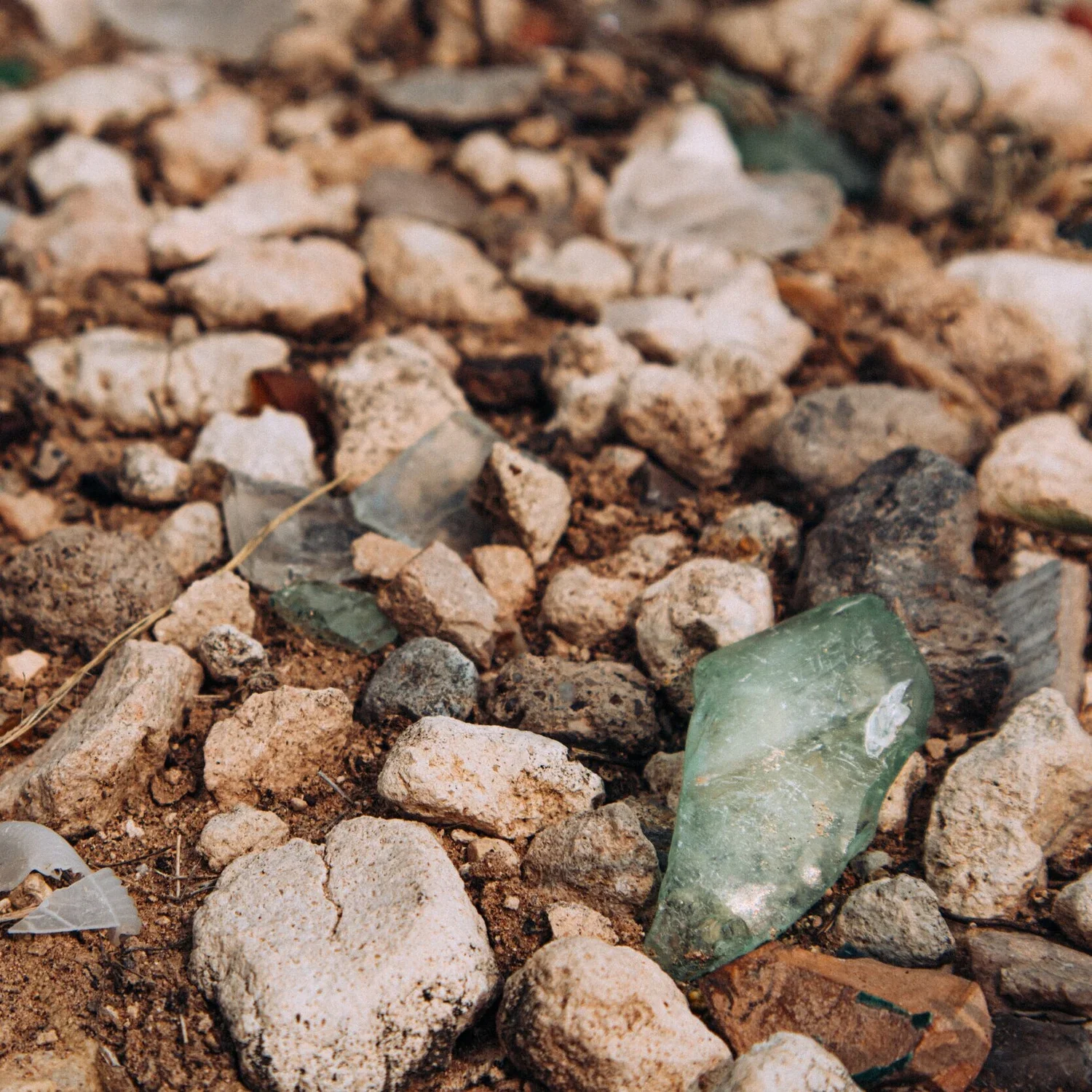
One day, while walking a familiar trail in my hometown, I noticed something unusual scattered along the path. It wasn’t the typical littered trash you might expect to see near a trail—no soda cans or plastic bags left behind by careless passersby. Instead, there were pieces of old construction: chunks of mid-century wall, weathered cinderblocks, fragments of tile, and large sheets of glass worn smooth by time and the elements.
It looked like the remains of something that had once mattered.
Curious, I later learned that this area had been used as a dumping ground after the cleanup of the 1970 F5 tornado that tore through the city. What I had stumbled upon wasn’t just debris—it was the aftermath of disaster, quietly resting in the background of everyday life. A storm had ripped through homes, buildings, and lives, and what couldn’t be salvaged had been carried here and left to settle into the earth.
Standing there, I noticed something remarkable.
Trees were growing straight through cinderblocks. Glass fragments had blended into the soil and looked almost like natural stones. Moss clung to broken concrete. Roots wrapped themselves around pieces of what used to be walls, as if nature was slowly reclaiming what had been lost. It was as though time itself was speaking through the landscape, gently reminding anyone who paused long enough to look that growth is persistent, even in the presence of destruction.
Nothing about the rubble disappeared entirely—but it was no longer the whole story.
And I found myself thinking about a question people often ask: If you could go back, would you do things differently?
For me, the answer is no.
Not because the storms were easy. Not because the destruction didn’t hurt. But because the debris tells a story that is too important to erase.
There have been moments in my life that felt like a tornado ripping through my spirit—moments that left me disoriented, shaken, and unsure of what would remain when the winds finally settled. There were calls for my expulsion from the university because of my identity. There were friendships that ended because prejudice spoke louder than love. There were moments when I wondered if I would ever feel steady again, if the ground beneath me would stop shifting long enough for me to breathe.
Those moments were real.
The destruction was real.
The loss was real.
But so was the growth that came afterward.
Like the trees growing through cinderblocks, my soul kept reaching upward. It found ways to root itself in new soil. It learned to stretch toward light even when surrounded by fragments of what once felt like safety and belonging. The rubble didn’t disappear—it remained visible, present, a reminder of what had happened—but it was no longer the defining feature of the landscape.
Growth became the defining feature.
That is the quiet miracle of persistence. Not that storms never come, but that life continues after they pass. Not that destruction never happens, but that something within us keeps choosing to grow anyway. Not that the rubble vanishes, but that new roots form around it, weaving it into a larger and more meaningful story.
When I sift through the rubble of my own life now, I find that my perspective has softened. The sharp edges of pain have been worn smooth by time, much like the glass along that trail. I can look at those pieces of debris with kinder eyes and a gentler spirit, recognizing that they hold a temporary place in the larger narrative of who I am becoming.
I see the storms, yes—but I also see the trees.
I see how the older growth now provides shade so younger, more fragile parts of myself can thrive. I see resilience where I once only saw survival. I see wisdom where there was once only confusion. I see hope where there was once only fear. The rubble is still there, still part of the landscape, still part of the history—but it is surrounded by life, by growth, by something that insists on continuing.
And that changes everything.
Because when you begin to see your life this way, you realize that the question is not whether the storm happened. The question is what grew afterward. The question is what took root in the broken places. The question is what new life emerged from what once felt like loss.
Time will always do what time does. It will weather the glass. It will soften the concrete. It will grow trees through what once seemed immovable. It will reshape landscapes and stories and hearts in ways we cannot always see in the moment.
But we still get to choose how we remember the storm.
We can choose to remember only the destruction, only the pain, only the debris left behind. Or we can choose to see the person who grew despite it. We can choose to notice the roots pushing through the rubble. We can choose to see the shade being cast for future growth. We can choose to honor both the storm and the resilience that followed.
Sifting through the rubble is not about pretending the storm never happened. It is about recognizing that the storm did not get the final word.
Growth did.
Hope did.
Persistence did.
So here’s to weathering the storms.
Here’s to standing in the aftermath and choosing to grow.
Here’s to roots that push through broken concrete and reach toward light anyway.
Here’s to the quiet, steady persistence of the human spirit.